Convenience with control: how I see the future of market research
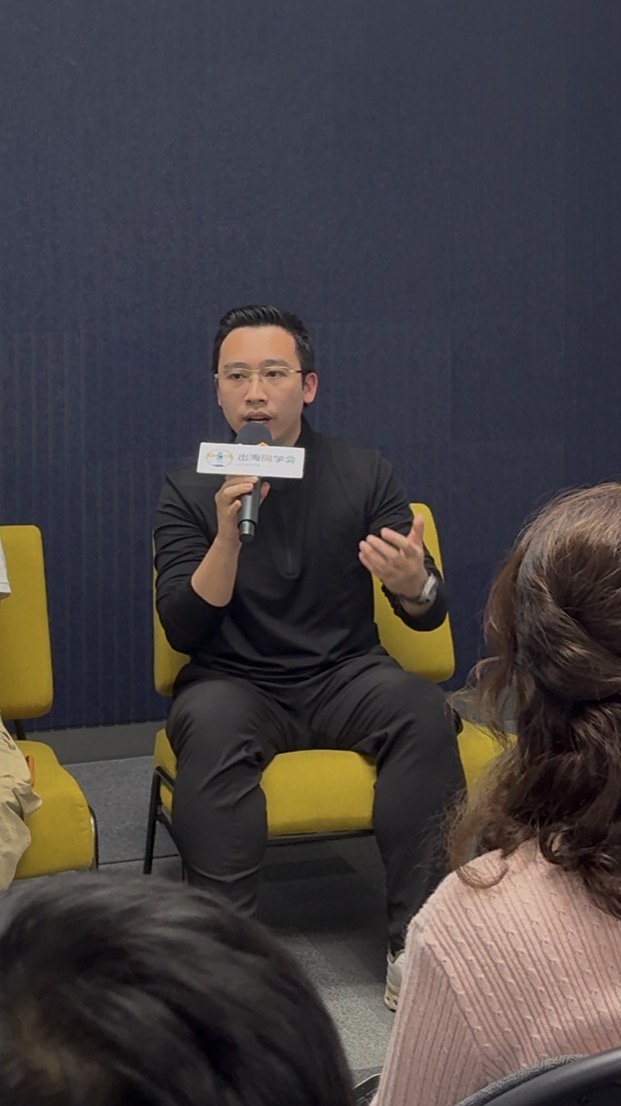
I recently joined Craig Griffin's Campaign for Real Qual, alongside Davin, our CEO at Cookiy AI, to debate where research is heading. Here is the fuller version of what I believe: why the human stays in the loop, where the growth is, and what researchers should do now.
I spent a decade inside market research, at Nielsen, Statista, and Cint, running large multi market programs across the US, Europe, and Asia, before I joined Cookiy AI to build the next chapter of it. So when I sat down with Craig Griffin, the founder of FUEL ASIA, and Davin, our CEO at Cookiy AI, on his Campaign for Real Qual, I was not there to argue that AI replaces the researcher. The reframe I keep coming back to is the opposite. The future of market research is not human versus AI. It is convenience with control.
Here is what that phrase actually means to me. AI can now deliver research at a scale and speed the old cost base could never support. But at every step where the work is created, writing the discussion guide, recruiting the right people, moderating the conversation, analyzing what came back, the human keeps the ability to jump in and change the course. We built Cookiy so agencies, freelancers, in house teams, and platforms like ours coexist, each accelerated by AI, rather than one replacing the next. Convenience without control is a black box. Control without convenience is the slow, expensive process we are all trying to move past. The value is in holding both at once.
My years in the field taught me why the human has to stay close. The hardest part of research was never collecting answers, it was staying close enough to the evidence to internalize it, so that when you walk into a room to change a decision, you carry conviction, not a slide. That is why I care so much about a design where researchers can watch and interrupt an AI moderated session in real time. Distance from the data is distance from the persuasion. In the high context markets I have worked across Asia, where so much meaning sits outside the words, that closeness is not a nice to have, it is the whole job.
On the podcast I made two arguments about where the growth is, and I will stand behind both. The first is triangulation. The complaint I heard for years from clients was that their quant, their qual, and their CRM never talked to each other, so they had three views and no decision. The win is combining them into one line of sight on what customers actually value. The second is democratization. Market research has been a fifty thousand dollar activity locked to big brands, when the product manager, the small business, and the founder who wants to hear from real users are exactly the people who need evidence most. That is who I am building this for.
I do not think of myself as sitting on the sidelines of this shift, describing it. I am building for it, from the revenue and research side, with the instincts of someone who has started and scaled things before. A constraint this fundamental, the old trade of depth against scale, only breaks a few times in a career, and you commit to those moments and build on them, you do not wait them out. That is the bet I have made, and I intend to keep building at the front of this industry, not behind it. Real voices deserve real impact, and the businesses that can hear their customers clearly and affordably will out decide the ones that cannot.
Amplify your originality, not just your efficiency
That line is not only mine. When I landed on it during the show, Craig, a thirty year veteran running a deliberately impartial program, called it a nice way to end, because it was the exact theme of the keynote he had just delivered at IIEX with David Coffin. Two people who came up through very different sides of research had arrived at the same conclusion: in the race to be efficient and cheap, the winning move is to use AI to amplify what is original to you, not to flatten it. When a point lands in the same place for a thirty year practitioner and for me, I take it as a signal worth building on.
So if you are a market or qualitative researcher reading this, my advice is the one I gave on the show. Be more open minded than feels comfortable, and take some real risks. Research has lived through this before, the resistance that met SurveyMonkey, Confirmit, and SPSS looks quaint now, and we are in the same phase again. When AI automates the routine, the flow you design that fits your own work, your own market, and your own judgment is what makes you different, because otherwise every report starts to look identical. That is the conversation I want to keep having, and if you want to have it directly, my door and this desk are open.
Watch the full episode of the Campaign for Real Qual here: /insights/future-of-qualitative-research-campaign-for-real-qual.